I recall how nervous I was the first time I stood in front of students to teach a class. I questioned if I’d be a good teacher and if the students would like me. Originally a music teacher, I am now a librarian. I’ve been in the education field for a while, from K-12 to higher education. Although I make every effort to be an effective educator, I continue to battle that fear.
I will always be an educator. The profession of librarian offers a multitude of enriching teaching experiences and opportunities. There may be some who believe that our daily activities primarily consist of reading books and requesting that consumers maintain a quiet environment. Nothing could be further from the truth. In my role, I am engaged in the task of designing instructional plans aimed at equipping students with the necessary abilities to proficiently handle and manage information. This pertains to the utilization of scholarly resources in the context of conducting research assignments.
Not all librarians possess a formal teaching qualification. Like other professionals, Librarians actively engage with professional organizations in order to stay abreast of emerging trends. I recently became a member of a regional organization known as the Library Exchange Observation (LEO). The major objective of LEO is to foster the sharing of knowledge, promote the dissemination of best practices in instruction, and facilitate the observation of library education methodologies among the institutions involved.
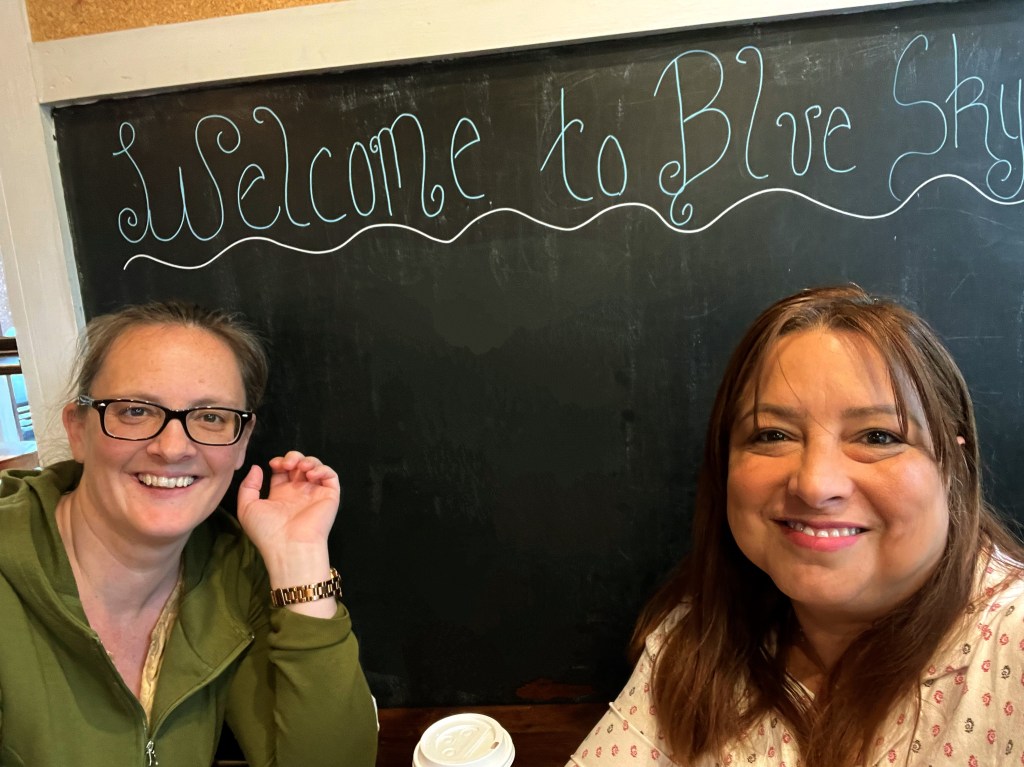
One of the objectives assigned to the LEO members during this academic semester was to arrange an encounter over coffee with a fellow colleague. I was assigned to collaborate with Sara Sprague, a librarian affiliated with Hollins University. As per her professional profile at Hollins University, Sara has demonstrated active engagement within the Roanoke community in her capacity as an attorney, as well as via her involvement in nonprofit work and advocacy for social justice.
More information about Sara Sprague
The originally intended informal lunch meeting evolved into a really enriching encounter characterized by the exchange of ideas. Sometimes, informal conversations might yield greater insights compared to official and structured meetings. During our time together, we engaged in an informal dialogue pertaining to our respective institutions, personal backgrounds, library teaching programs, artificial intelligence, areas of interest, and potential collaborative endeavors. Having the opportunity to share with another library professional was a fulfilling experience.
One effective approach to acquiring knowledge about instructional strategies is by seeking feedback from other practitioners within the library field. Despite potential apprehension about being observed when teaching, it is advantageous as it provides an opportunity to obtain constructive feedback and enhance one’s confidence.
Additionally, it is imperative to reflect on one’s teaching experiences, specifically focusing on identifying aspects of what was successful. Other questions to reflect on can be: What potential areas for improvement may be identified? What novel educational resources can augment my pedagogy? What strategies can be employed to integrate active learning activities? and so many more.
Another means of maintaining an ongoing learning trajectory is participation in library seminars and conferences organized by library associations at the local, regional, and state levels. There are certain activities sponsored by professional library organizations that are free of charge. You can also engage in educational coursework and maintain a consistent reading regimen focused on contemporary trends in library instruction and pedagogical approaches to learning.
We are not yet fully aware of the effects that emerging technologies, like artificial intelligence, will have on our professions, especially in libraries. There are so many questions that lack a corresponding answer. In order to succeed, it is imperative that we demonstrate adaptability, active listening, and continuous evolution. Being able to exchange our experiences and thoughts with fellow coworkers provides a sense of comfort and fulfillment. I am aware that automation and technology will take over many of the tasks currently performed by humans. However, the power of human interaction, particularly engaging in meaningful conversations with fellow colleagues, remains irreplaceable.
I am incredibly enthusiastic about all the opportunities that the LEO group has in store for us. Possible future activities include visiting our respective colleges, observing our instruction activities, and who knows what other opportunities may arise! Our ability to effect change doesn’t depend on having a lot of resources, as the most crucial and impactful resource at the disposal of every institution is its human capital. Each of us can take proactive steps to look for possibilities within the library community for professional development and collaboration.
What other strategies can help you improve your library instruction? Please, tell me in the comments!
 Karen D. Centeno, MIS